PRP vs. Cortisone for Foot Pain: Choosing the Right Injection
One suppresses your biology; the other concentrates it. Choosing correctly depends on which question your foot is asking.
Read the article →PRP flips the usual injection logic: instead of suppressing your biology with steroid, it concentrates it, delivering your own platelets and their healing growth factors directly into tissue that stopped repairing itself.
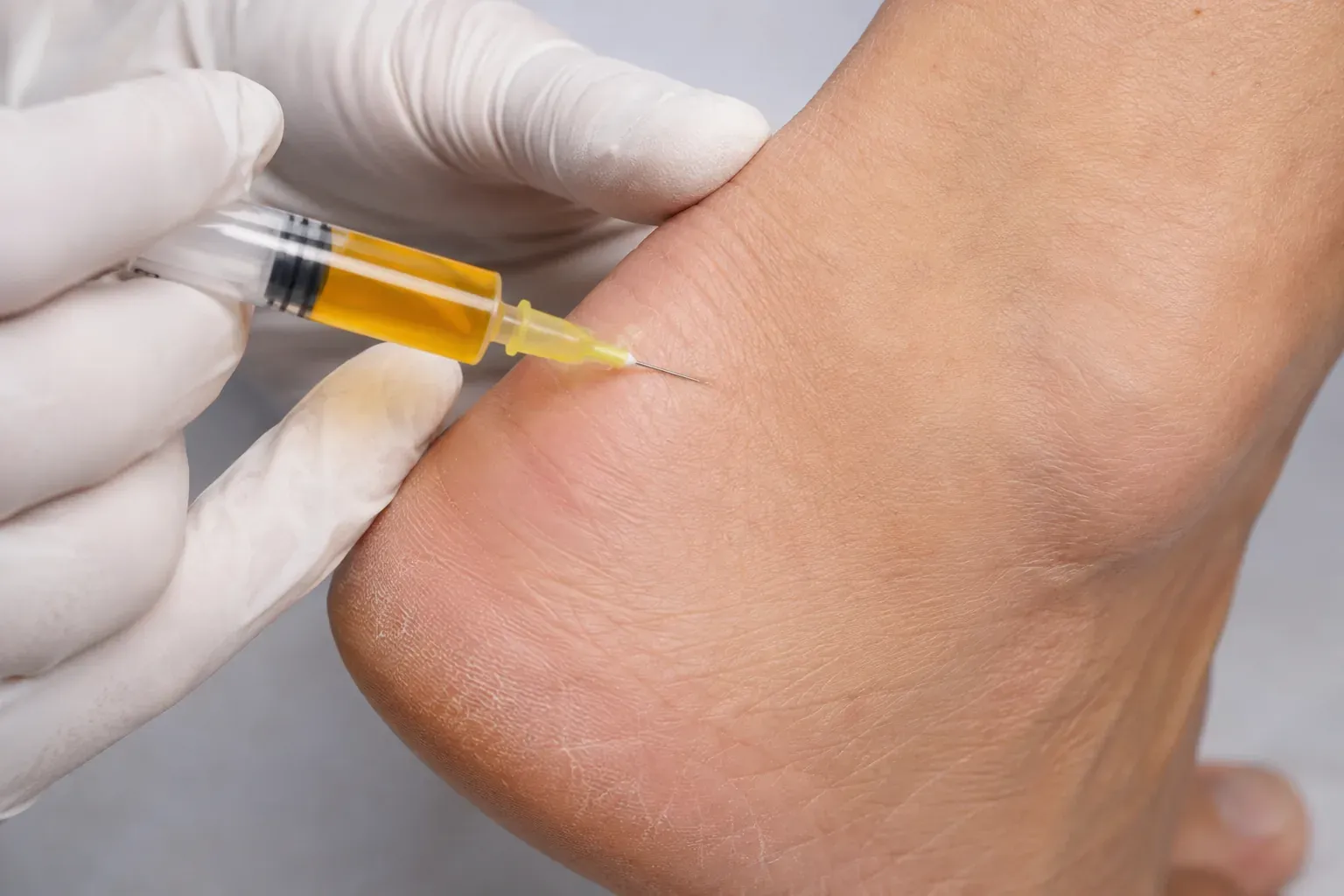
Platelets are your blood's first responders, packed with growth factors that recruit repair cells, spark new blood vessel growth, and direct collagen rebuilding. A small blood draw is spun in a centrifuge to concentrate platelets several-fold; that platelet-rich layer is injected precisely into the degenerated tendon or fascia, usually under ultrasound guidance. The concentrated growth-factor payload restarts a repair process that chronic, poorly-vascularized tissue had abandoned, healing rather than hushing.
The profile: months-old tendon or fascia problems that conservative care hasn't beaten, in patients preferring regenerative over suppressive treatment, or where cortisone is unwise (the Achilles, repeat-injection situations). Less suitable with certain blood disorders or anti-inflammatory regimens that blunt platelet function, and we'll ask you to pause NSAIDs around treatment for exactly that reason.
Ultrasound verifies degenerated tissue and marks the target; PRP works where it's placed, so placement is everything.
A standard blood draw, 10 to 15 minutes of centrifugation, then ultrasound-guided injection into the lesion under local anesthesia. In and out within an hour.
A short protection period (sometimes a boot for lower-limb tendons), then a progressive loading program; the injection starts the repair, loading tells it which direction to build.
Expect real soreness for several days to a week; that inflammation is the therapy working, which is also why NSAIDs stay paused. Activity ramps progressively over weeks, and benefits build on tissue-repair time: most studies and our experience put meaningful improvement at 6 to 12 weeks, strengthening for months after. One injection is often sufficient; stubborn cases sometimes warrant a second.
Safety is a genuine strength: it's your own blood, so allergic and systemic risks are minimal, leaving mainly injection-site soreness and rare infection risk. Honest limits: evidence is good but not uniform across conditions (strongest for plantar fasciitis and some tendinopathies), results take weeks, insurance rarely covers it, and we quote the cash cost before anything. PRP repairs tissue; it doesn't fix the mechanics that wrecked it, so it ships with the correction program.
They answer different questions. Cortisone quiets inflammation quickly but doesn't repair, and can weaken tissue with repetition; PRP is slower, sorer upfront, and aims to actually rebuild degenerated tissue. For chronic tendinosis and recurrent fasciitis, PRP or shockwave usually beats a third round of steroid.
Insurance almost never covers PRP, so it's self-pay; the office quotes the exact fee before you decide, with no surprises. When comparing, weigh it against the cost of another year of half-fixes.
For chronic plantar fasciitis and several tendinopathies, controlled trials show meaningful benefit, often outlasting cortisone at the one-year mark; for other uses evidence is thinner, and we'll tell you which side of that line your condition sits on.
One suppresses your biology; the other concentrates it. Choosing correctly depends on which question your foot is asking.
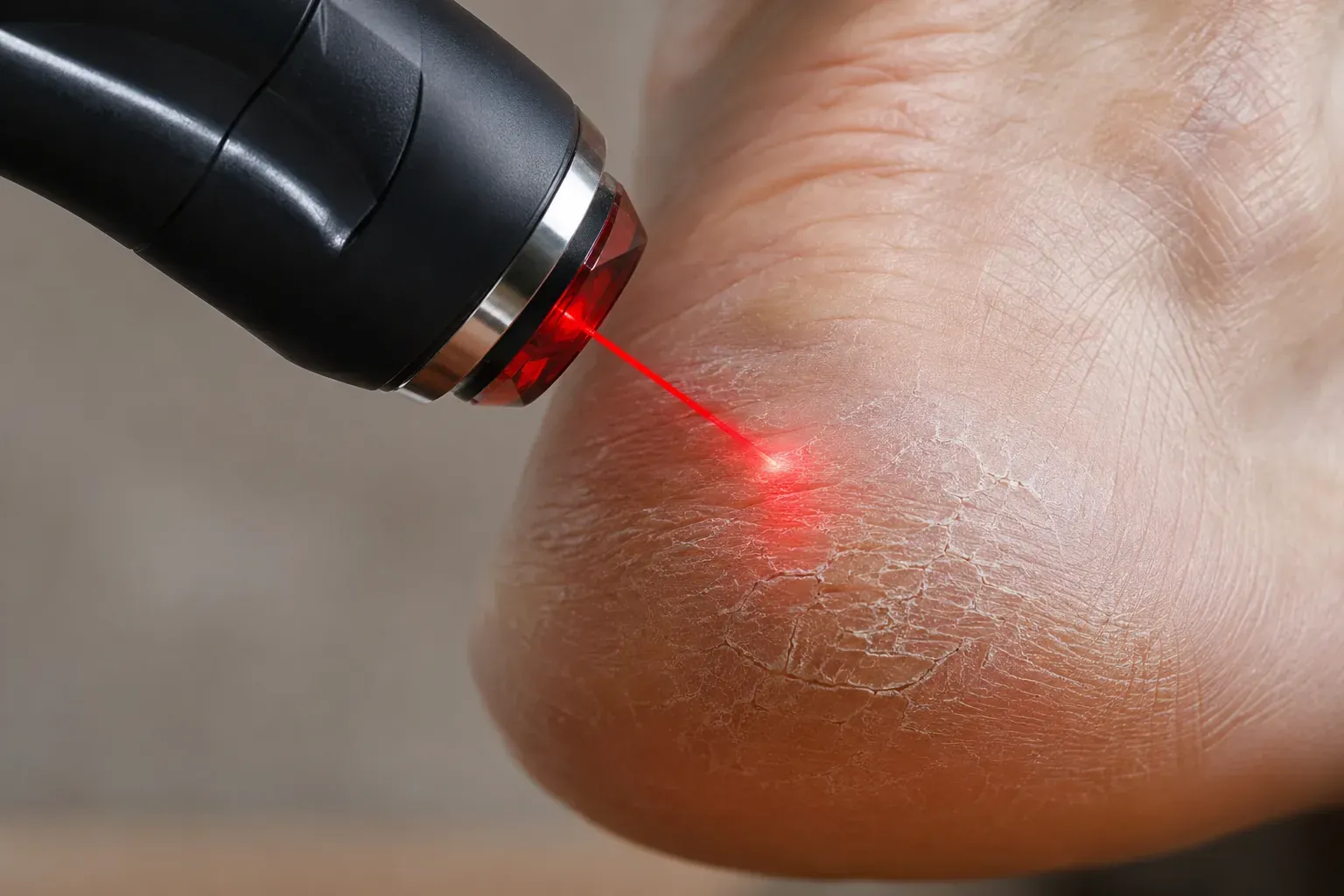
Read the article →Laser is a real tool for fungal nails, wrapped in more hype than any treatment deserves. Here's the signal without the noise.
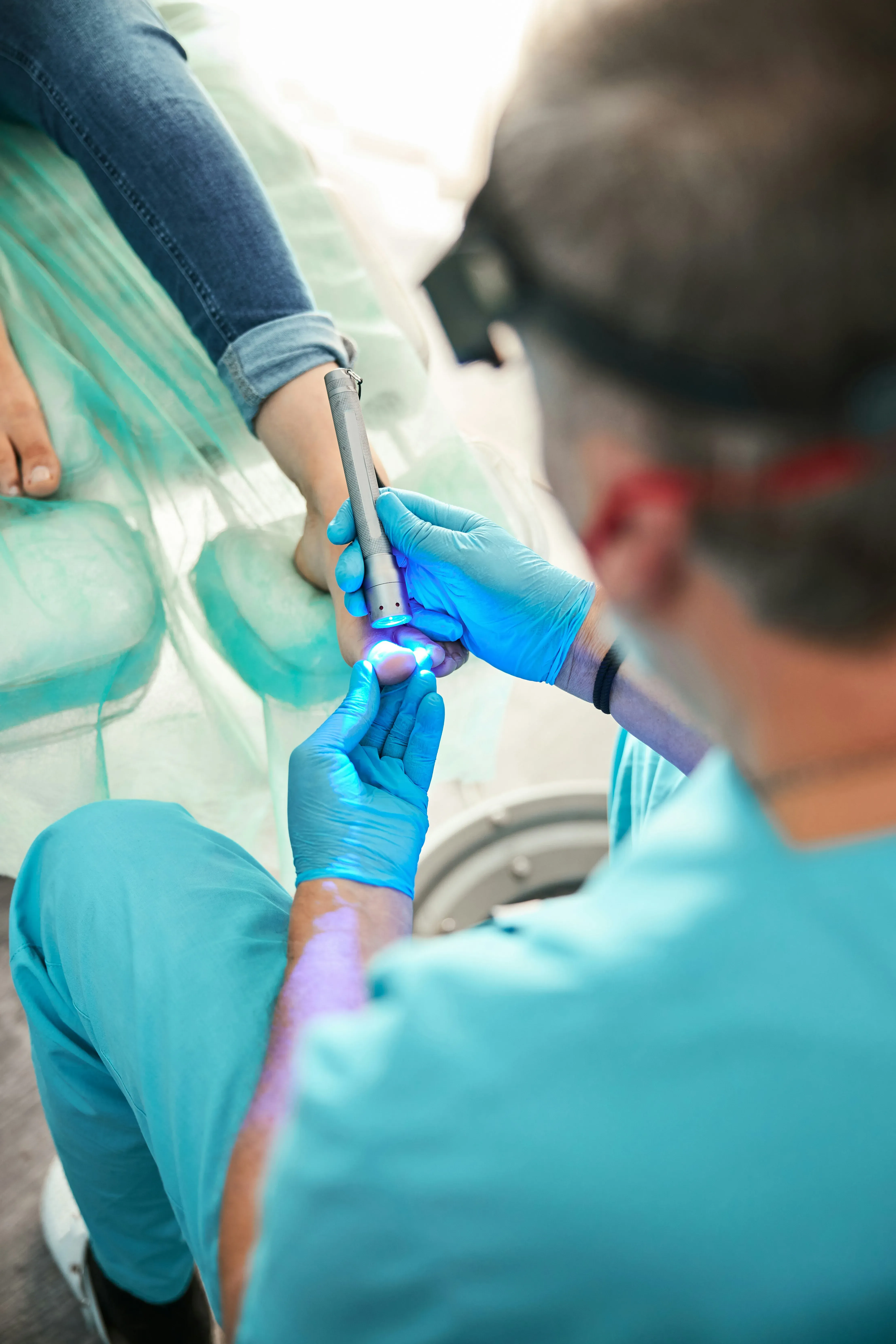
Read the article →Warts persist by hiding from your immune system. Swift's trick is blowing their cover.
Read the article →One exam at our Sugar Land office answers it. Call 346-594-9166 or book online.