Poor Circulation in Your Feet: Signs You Shouldn't Explain Away
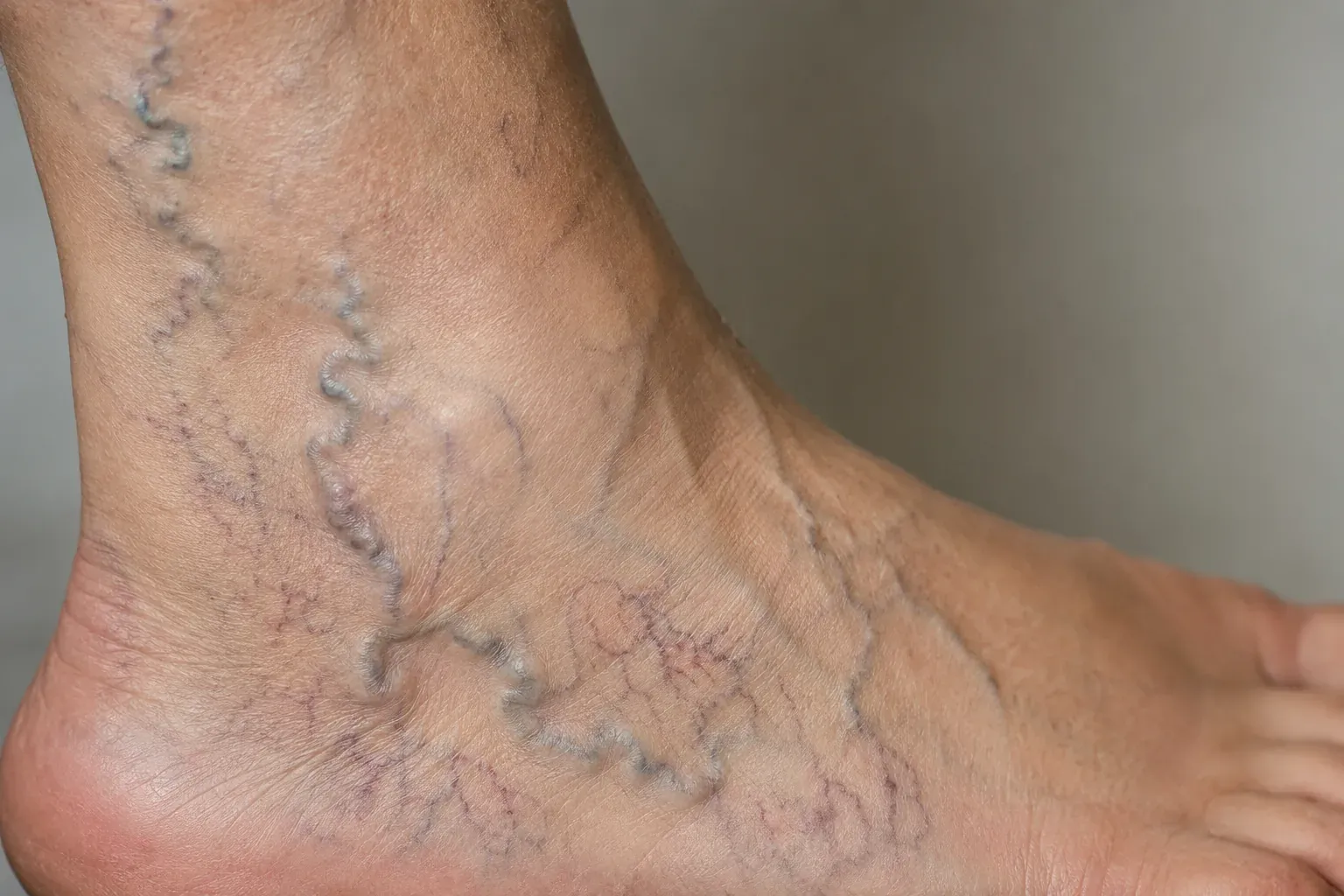
Feet are the first place circulation problems show and the last place people look for them. The signs have patterns.
Read the article →For most people, a blister is a nuisance. With diabetes, it can be the first domino. Regular podiatric care exists to stop that first domino from falling, and it's one of the best-evidenced, best-covered services in foot medicine.
Diabetes attacks feet on two fronts: elevated glucose gradually quiets the nerves (neuropathy), so injuries stop hurting, and narrows small vessels, so injuries heal slowly. Together they let small problems grow silently. Diabetic foot care is the counter-program: scheduled professional exams that catch what numb feet can't feel, safe management of nails and calluses that would be risky to handle at home, and a fast-response channel when something appears.
The comprehensive diabetic foot exam checks what you can't: monofilament and vibration testing to map sensation, pulse and circulation assessment, skin and nail inspection, pressure-point mapping, and footwear review. You leave knowing your actual risk level and the exam schedule that fits it, documented for your physician and your insurance.
Every diabetic needs a comprehensive foot exam at least yearly, and immediately for any new wound, color change, warm spot, or swelling. If you have neuropathy, deformity, or an ulcer history, exams move to every few months and nail care belongs in-office. Never wait on a diabetic foot concern; days matter.
Call 346-594-9166 promptly for: any open sore, blister, or drainage; a suddenly warm, red, or swollen foot (with or without pain); black or blue skin changes; a callus with dark or bloody discoloration. Urgent foot problems are worked into the schedule faster.
Treatment starts with the simplest option likely to work and escalates only when needed.
Risk-based frequency, from annual for low risk to quarterly for high risk. Covered by Medicare and most plans precisely because prevention works.
Safe trimming and thinning that would be risky at home with neuropathy; this alone prevents a large share of diabetic wounds.
Diabetic-appropriate footwear guidance, custom inserts, and offloading of hot spots before they break down.
Same-day access for new problems, and advanced wound care when something does open. Speed is the treatment.
Yes; Medicare covers diabetic foot exams and, for patients with qualifying conditions like neuropathy, routine nail and callus care, plus therapeutic shoes for those who qualify. Most private plans follow similar logic. The office verifies your specific coverage before your visit.
Feeling fine is exactly what neuropathy feels like as it develops; sensation fades so gradually most people can't perceive the loss. Testing finds it years before you would, and that head start is where prevention lives.
If your sensation and circulation test well and you can see and reach comfortably, careful straight-across trimming is usually fine; we'll tell you at your exam. With neuropathy, poor circulation, or thick nails, in-office care is safer and typically covered.
Call 346-594-9166 the same day, keep weight off it, and don't apply anything stronger than clean gauze. Diabetic wounds are graded emergencies: most are simple to treat when hours old and hard to treat when weeks old.
Feet are the first place circulation problems show and the last place people look for them. The signs have patterns.
Read the article →On most feet a callus is cosmetic. On a diabetic foot it's a pressure gauge, and sometimes a lid over something worse.
Read the article →Medicare pays for therapeutic shoes and inserts for qualifying diabetics every year. Most eligible patients never use it.
Read the article →One visit at our Sugar Land office gets you a diagnosis and a plan. Call 346-594-9166 or book online.