How Custom Orthotics Are Made: From Your Foot to the Finished Device
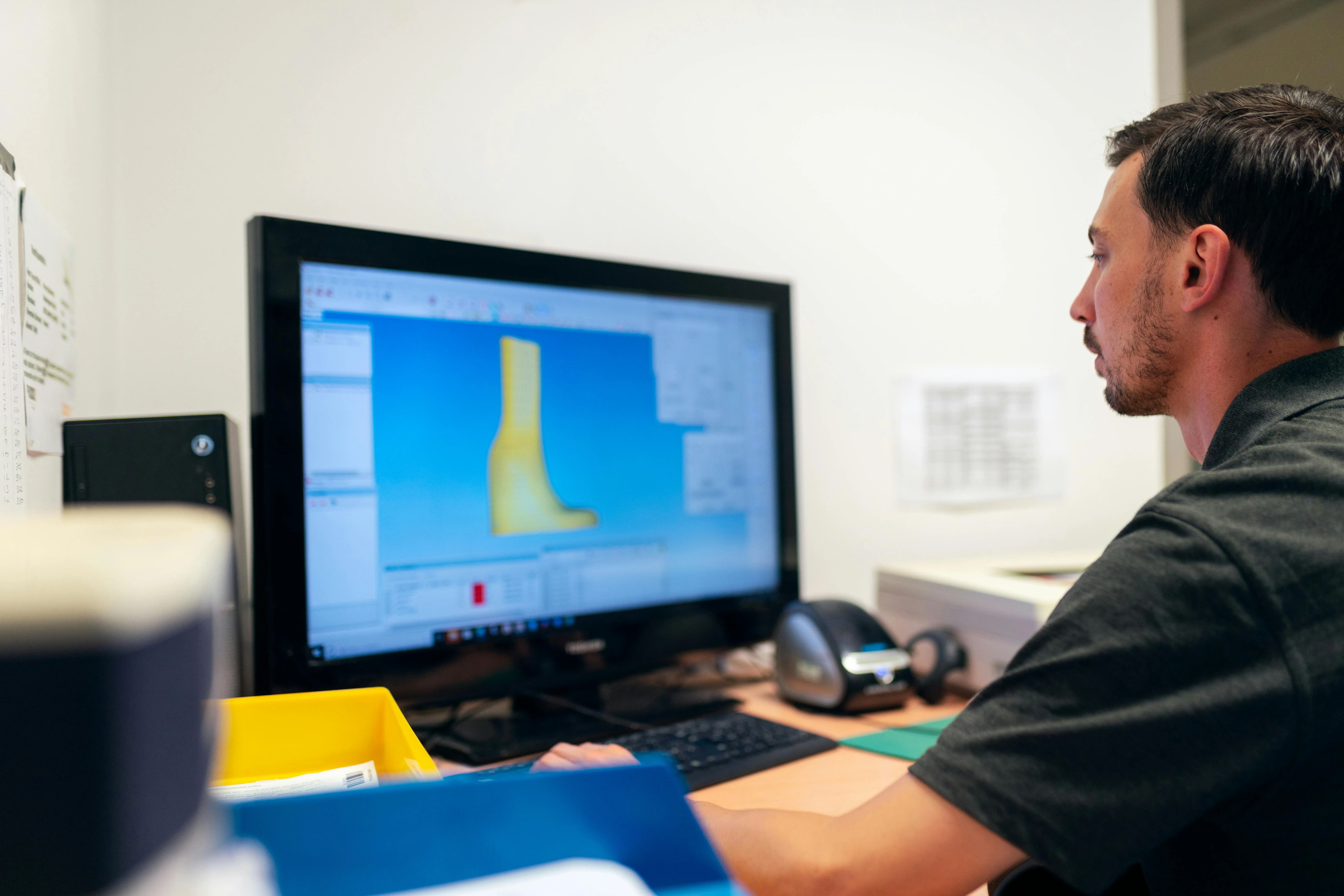
Ever wonder what the lab actually does with that mold of your foot? Here's the journey, and why each step earns its place.
Read the article →The least glamorous treatments in podiatry are also the winningest: footwear, stretching, padding, taping, and activity adjustments resolve the majority of foot problems that walk into our Sugar Land office. Done precisely, simple isn't the same as basic.
Almost every non-traumatic foot problem is a load problem: some structure receiving more stress than it can repair. Conservative care rebalances that equation from both sides, reducing the load (footwear, padding, taping, activity modification, offloading) while building capacity (stretching, strengthening, tissue care). The craft is in the specifics: which stretch, exactly where the pad goes, which shoe feature actually matters for your diagnosis. Generic advice fails where precise mechanics succeed.
Nearly everyone starts here, and most finish here too. It's the right first step for recent-onset pain, overuse problems, and deformities that hurt but don't yet limit life. It's not sufficient by itself for infections, wounds, unstable fractures, or advanced deformities, though it still supports treatment in all of those.
An exam pinpoints the overloaded structure and the mechanics feeding it, because conservative care aimed at the wrong target is just waiting.
Specific stretches with dosage, footwear guidance by brand-feature rather than brand-hype, padding or taping applied and taught, and activity adjustments that keep you moving.
A follow-up confirms the trend. Improving: we progress. Flat: we adjust before months slip by, escalating to the next tier only when the simple tier has been followed consistently.
There's no downtime; conservative care works while you live your life. Most overuse problems show meaningful improvement within 2 to 6 weeks when the plan is followed consistently, and consistency is the active ingredient: a stretching program done daily beats a perfect program done occasionally.
The honest limits: conservative care can't straighten structural deformities, regrow cartilage, or fix problems whose cause stays uncorrected. Its main failure mode is under-dosing, trying it halfway and concluding it failed. We set explicit timelines so that if simple measures aren't winning, we escalate deliberately instead of drifting.
Most soft-tissue problems declare themselves within 4 to 8 weeks of consistent care: clearly improving, or not. We set that checkpoint at your first visit, so escalation is a scheduled decision rather than an eventual frustration.
No. Pure rest pauses problems; conservative care fixes causes: mechanics corrected, tissues stretched and strengthened, pressure redistributed. Most plans keep you active on purpose, because tissue heals to the demand you place on it.
Usually dosage and placement. The internet's calf stretch is right; holding it 10 seconds twice a week is not. A pad in the wrong spot moves pressure onto the problem. Details are the difference, and details are what the visit is for.
Ever wonder what the lab actually does with that mold of your foot? Here's the journey, and why each step earns its place.
Read the article →Brands change yearly; the features that help a strained fascia don't. Learn the checklist and every shoe store becomes easy.
Read the article →RICE is still the right first move after a foot or ankle injury. What comes next has changed more than most people know.
Read the article →One exam at our Sugar Land office answers it. Call 346-594-9166 or book online.