Bunion Surgery Recovery Timeline: Month by Month
The week-by-week version gets you through recovery; the month-by-month version shows you where it's all going.
Read the article →Bunion surgery has one job splints and spacers can't do: put the bone back where it belongs. Modern correction is a far cry from the horror stories of decades past, and its results, done for the right reasons on the right bunion, are life-changing.
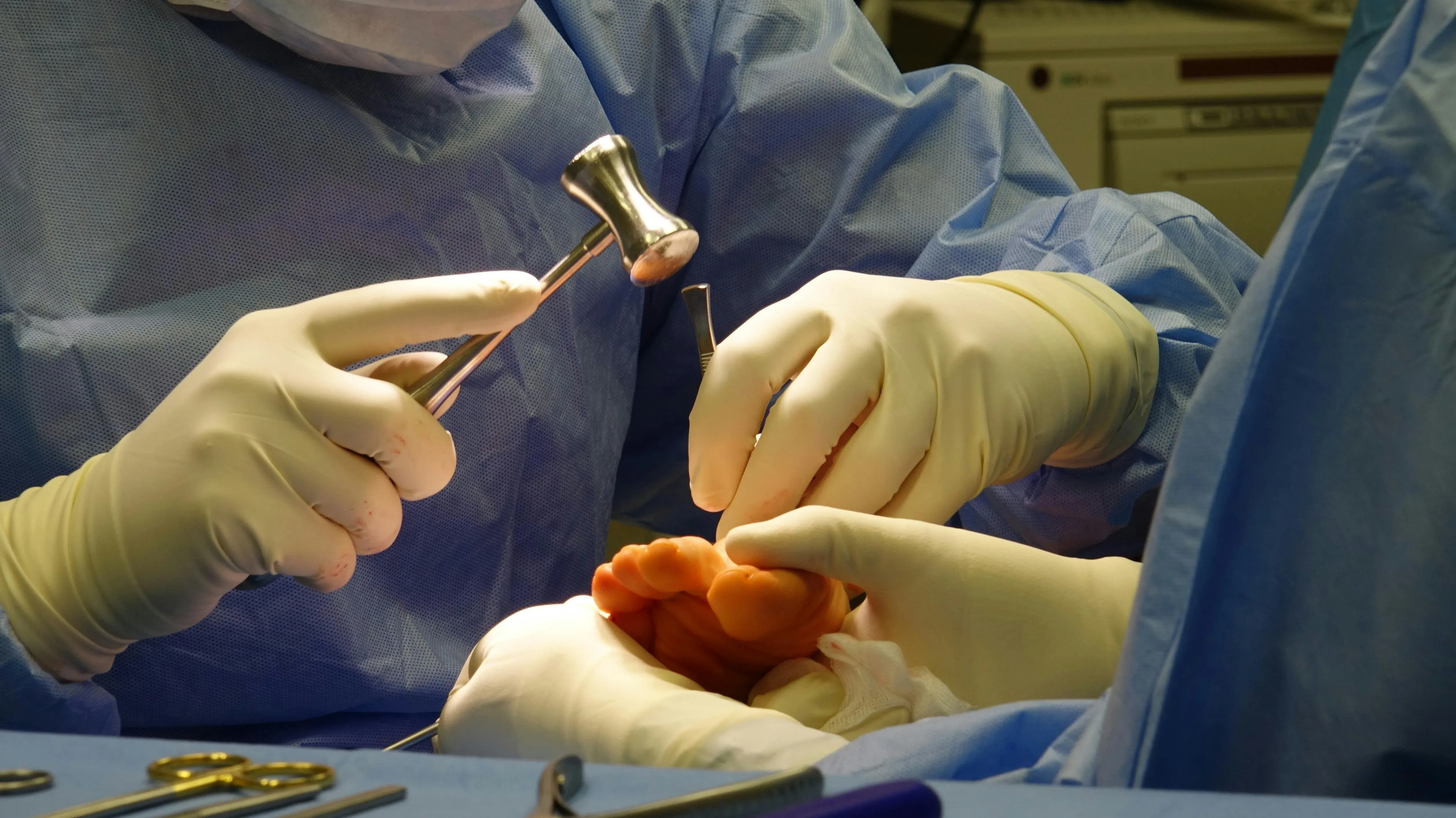
A bunion is a drifted first metatarsal, so correction moves bone: an osteotomy (precise cut and shift, secured with small screws) for most bunions, joint-corrective procedures like the Lapidus for severe or hypermobile cases, and modern minimally invasive techniques for suitable candidates. The choice isn't fashion; it's matched to your bunion's measured angles, joint quality, and flexibility from the X-ray workup. Realigning the bone realigns the tendons around it, which is what keeps correction from relapsing.
The green lights: pain that persists despite wide shoes and support, progression that's crowding neighboring toes, and X-ray severity that matches your symptoms. The pauses: purely cosmetic goals (scars and recovery buy comfort, not perfection), uncontrolled health factors, and seasons of life without recovery bandwidth. Age matters less than circulation and bone quality; we operate on the foot's biology, not its birthday.
Weight-bearing X-rays quantify your deformity's angles, which match you to the right procedure, from minimally invasive to Lapidus. You'll see the plan drawn on your own films.
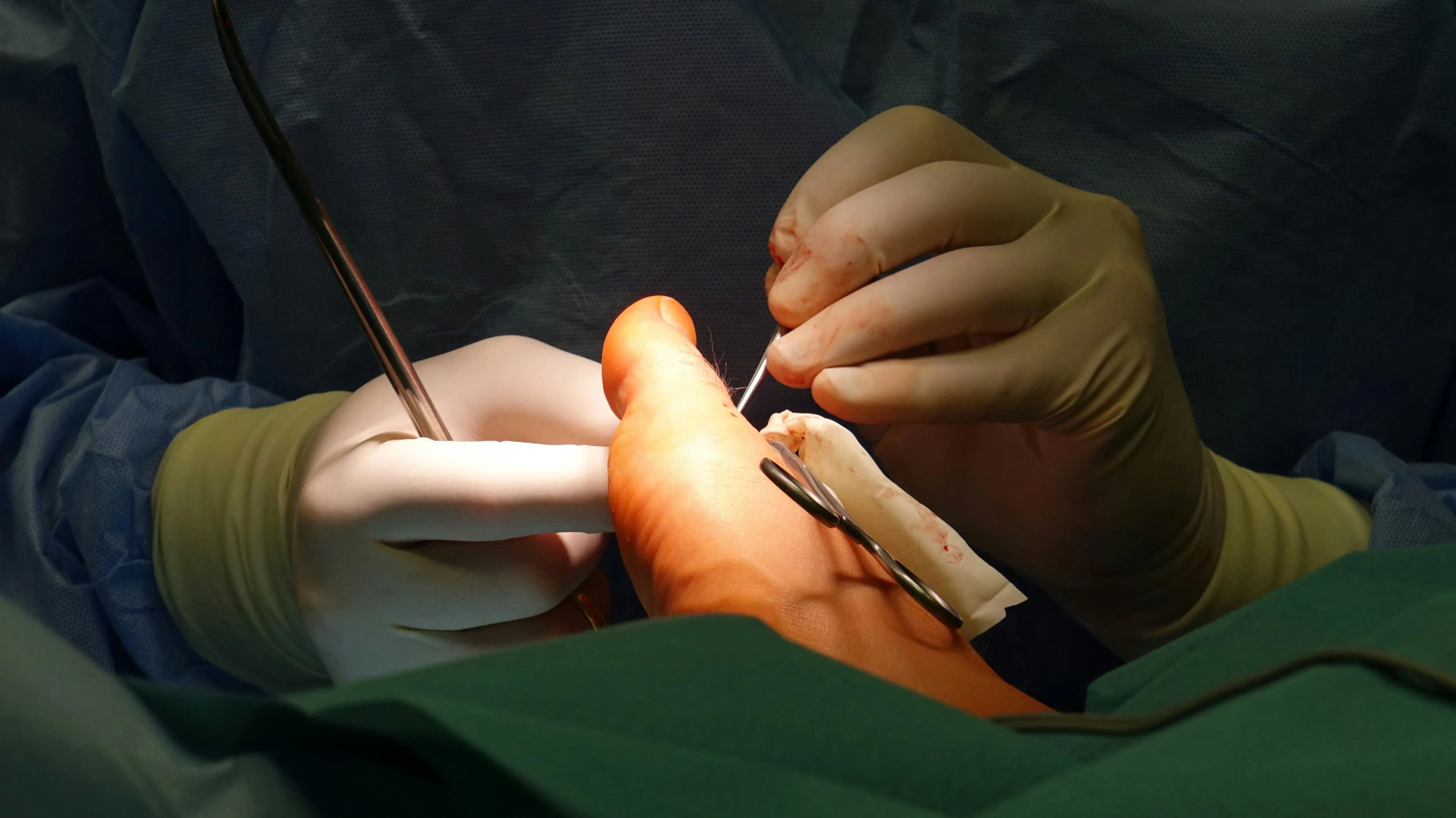
Typically 60 to 90 minutes under regional anesthesia with sedation; home the same day in a surgical shoe or boot.
Most osteotomies allow protected heel weight-bearing early; sutures out around two weeks, transition toward regular shoes typically at 6 to 8 weeks, with swelling continuing to fade for months. Checkpoint X-rays confirm the bone heals aligned.
Realistic arithmetic: 2 weeks of strict elevation-first living, 2 to 6 weeks in protective footwear with gradually increasing walking, regular athletic shoes around 6 to 8 weeks for most osteotomies (longer for Lapidus-type corrections), and impact sport after bone fully unites, commonly 3 to 4 months. Swelling is the long tail; many feet aren't at their final slimness until close to a year, even while feeling great far sooner.
Specific to bunions: recurrence (minimized by matching procedure to severity), transfer pain to neighboring metatarsals, stiffness of the big toe joint, hardware irritation (occasionally warranting later removal), plus the universal surgical risks of infection and slow bone healing. Smoking and uncontrolled diabetes multiply healing risk enough to change surgical timing. None of this is fine print; it's the actual consent conversation.
Recurrence is real but minority-sized, and mostly a procedure-matching problem: an aggressive bunion corrected with a too-conservative operation drifts again. Matching technique to measured severity, plus addressing your foot mechanics afterward, is the anti-recurrence strategy.
Usually yes, immediately, in a protective surgical shoe with heel weight-bearing, though the first two weeks should still be mostly elevation. Full normal walking builds over 6 to 8 weeks. The era of months on crutches is over for most bunion procedures.
Usually not: recovering with one working foot is manageable; with none, it's miserable and riskier. Most surgeons stage feet 3 to 6 months apart. Exceptions exist for specific situations, and we'll discuss yours honestly.
Real and improving: tiny incisions, less soft-tissue disruption, often easier early recovery, appropriate for many mild-to-moderate bunions. It's a technique, not magic; severe deformities still do better with open correction, and candidacy comes from your X-rays, not the brochure.
The week-by-week version gets you through recovery; the month-by-month version shows you where it's all going.
Read the article →The question every bunion patient asks first, answered honestly: week by week, from surgery day to sneakers to sport.
Read the article →One of foot surgery's smallest operations, explained start to finish so nothing on surgery day surprises you.
Read the article →One exam at our Sugar Land office answers it. Call 346-594-9166 or book online.