Wart, Corn, or Callus? How to Tell What's on Your Foot
Three lesions that look alike, get mistaken for each other constantly, and need completely different treatment.
Read the article →Plantar warts are viral squatters: HPV setting up in the sole's skin, protected by a callus roof your body builds over them. They're harmless, contagious, occasionally painful, and famously stubborn, which is why the freezing kit from the pharmacy so often loses the war.
A plantar wart is a benign skin growth caused by human papillomavirus entering through tiny breaks in the sole. Pressure flattens it into the foot and caps it with callus, hiding the classic signs: tiny black dots (clotted capillaries) and skin lines that break around, not through, the lesion. Warts spread by direct contact and can seed clusters (mosaic warts). Kids and teens collect them from pools and locker rooms; adults often host them for years.
Dr. Patel distinguishes wart from corn from callus in seconds (they're treated completely differently), gauges depth and spread, and asks what you've already tried, since prior treatments shape the plan. Rarely, an unusual lesion warrants further evaluation.
Treat warts that hurt, spread, multiply, or embarrass, and anything on a child's foot that isn't clearly improving. Diabetics should have any sole lesion evaluated rather than treated at home. Solo warts sometimes leave on their own within a couple of years; nobody's obligated to wait that long.
Call 346-594-9166 promptly for: a lesion that bleeds easily, grows quickly, or looks irregular, which deserves a professional look to rule out things that mimic warts. Urgent foot problems are worked into the schedule faster.
Treatment starts with the simplest option likely to work and escalates only when needed.
Shaving the callus cap and applying stronger acids than any pharmacy sells, on a schedule that keeps steady pressure on the virus.
The modern heavy hitter: seconds of focused microwave energy that triggers your immune system against the virus. No cutting, no wound care, high success on stubborn warts.
Clinical freezing reaches temperatures home kits can't, applied precisely after debridement.
For a solitary resistant wart, removal under local anesthetic ends the argument.
Home kits reach about -55°C through an intact callus cap; clinical treatment is colder, applied after the cap is removed, and repeated correctly. Under-treatment doesn't just fail; it gives the wart time to spread.
Swift delivers two-second pulses of microwave energy into the wart, provoking the immune response that HPV normally evades. Each pulse feels like a brief sharp sting that stops immediately; no wound, no bandage, walk out normally. Most warts need a short series of sessions spaced a month apart.
Moderately. The virus spreads on wet floors, so shower shoes, no shared towels, and covering the wart during barefoot time protect the household while treatment runs.
Body weight drives the wart into the sole like a pebble, and its callus cap concentrates the pressure. Even before the wart dies, debriding the cap usually brings immediate walking relief.
Three lesions that look alike, get mistaken for each other constantly, and need completely different treatment.
Read the article →Four real options, very different success rates. An honest comparison before you spend another year on the wrong one.
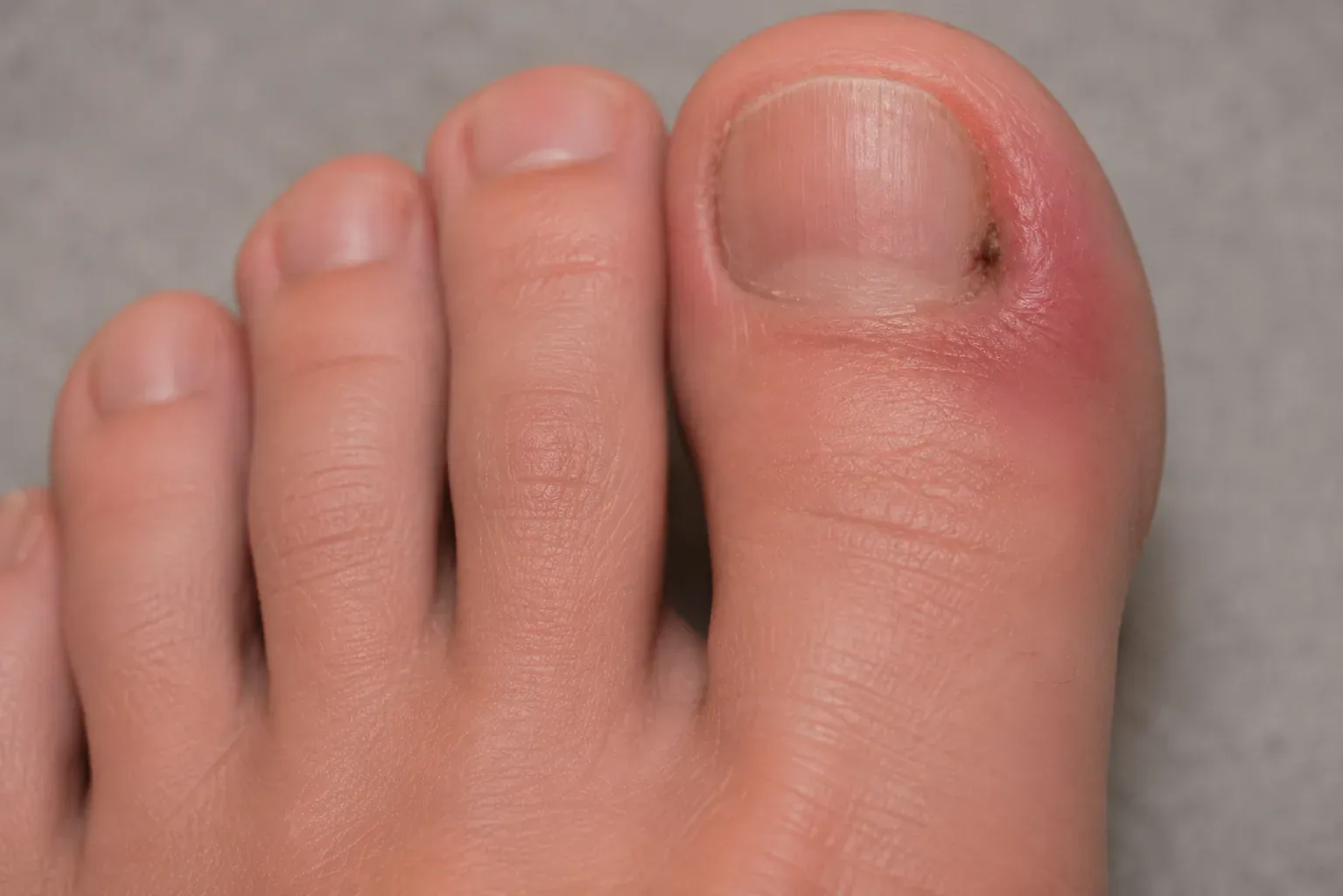
Read the article →Every ingrown toenail is angry; not every one is infected. Here's the line, and what crossing it means.
Read the article →One visit at our Sugar Land office gets you a diagnosis and a plan. Call 346-594-9166 or book online.