Callus Care for Diabetics: Why This One's Different
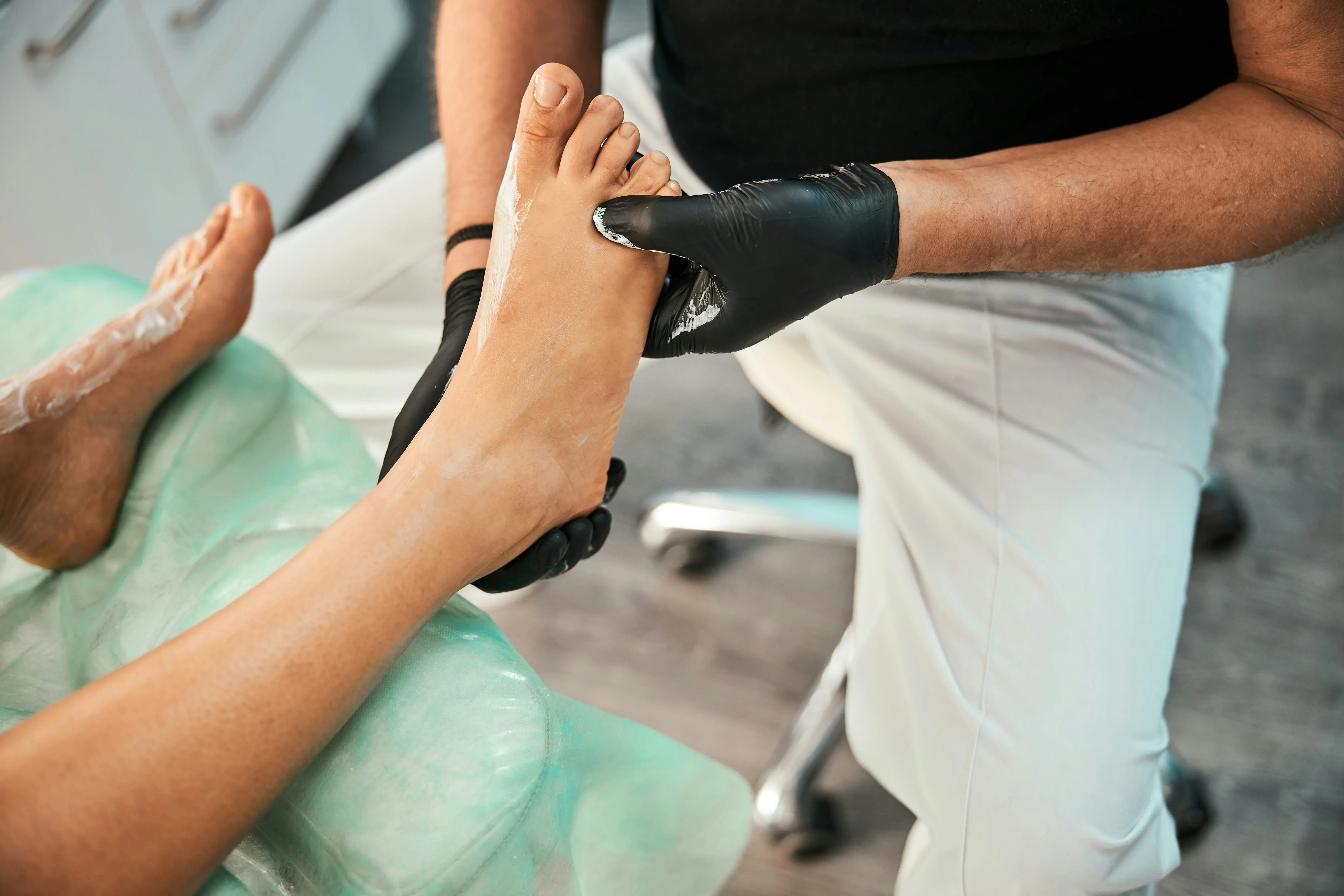
On most feet a callus is cosmetic. On a diabetic foot it's a pressure gauge, and sometimes a lid over something worse.
Read the article →A diabetic foot ulcer is the wound that doesn't follow the rules: it may not hurt, it won't close on its own schedule, and every week it stays open raises the stakes. Treated properly and promptly, most ulcers heal. The word doing the work in that sentence is promptly.
An ulcer is a full-thickness skin breakdown, usually at a pressure point, where neuropathy hid the damage and circulation slowed the repair. It often starts beneath a callus: pressure liquefies tissue under the hard cap until the surface finally opens, revealing a wound older and deeper than it looks. Healing requires three things simultaneously: a clean wound bed, pressure taken off completely, and enough blood supply, and treatment addresses all three.
Evaluation grades the ulcer's depth, checks for infection and bone involvement, tests circulation (healing is impossible without flow, so weak pulses trigger vascular referral), and maps the pressure that created it. X-rays screen for bone infection in deeper or older wounds.
The day you find it. Not after trying home remedies for a week. Ulcer outcomes track directly with time-to-treatment, and same-day calls get same-day guidance at our Sugar Land office.
Call 346-594-9166 promptly for: spreading redness or streaking; fever or chills with a foot wound; black tissue at the wound; exposed tendon or bone; a foot that's hot and swollen. Urgent foot problems are worked into the schedule faster.
Treatment starts with the simplest option likely to work and escalates only when needed.
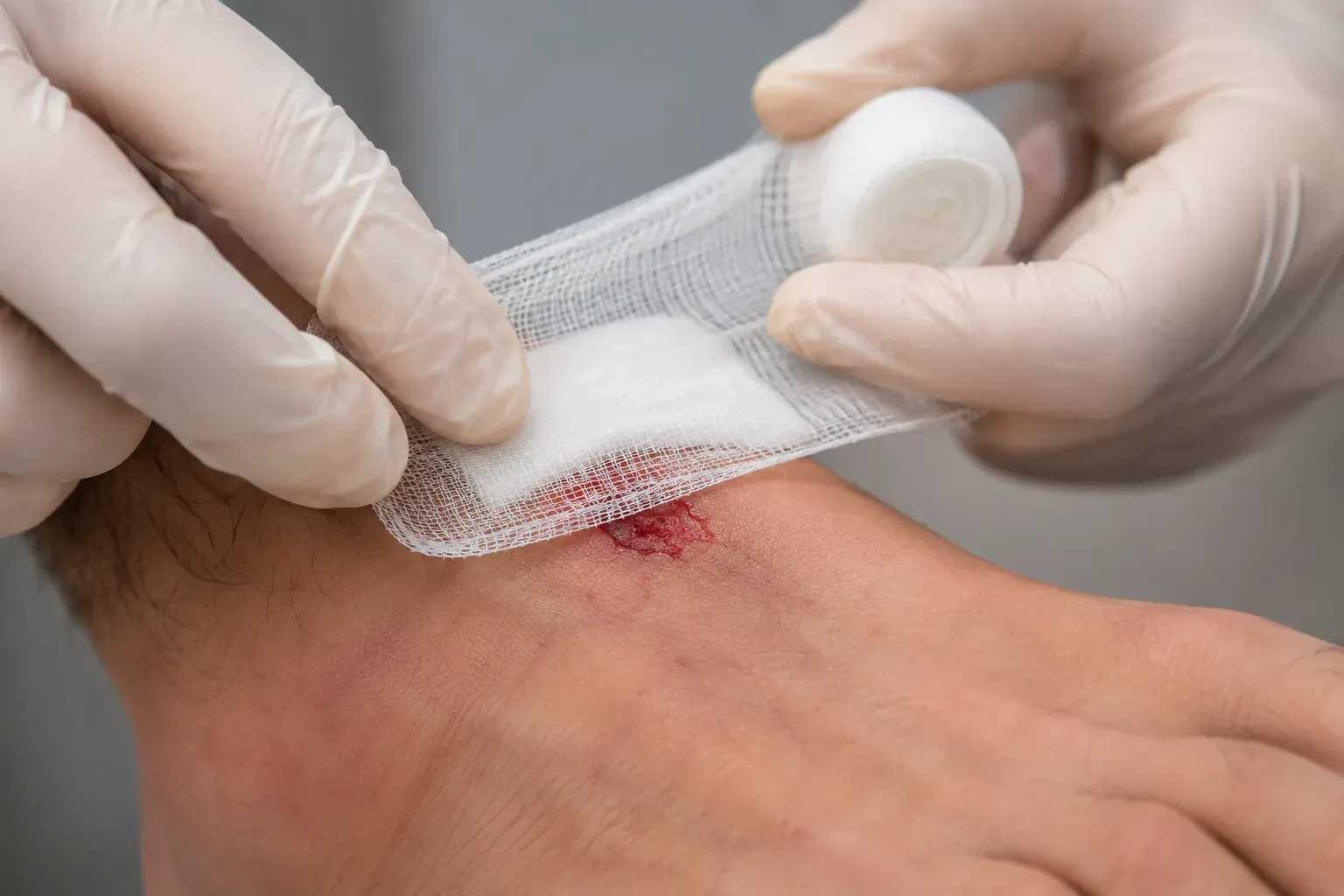
Removing callus rim and nonviable tissue converts a stalled chronic wound into a fresh one that can actually heal; usually painless in a neuropathic foot.
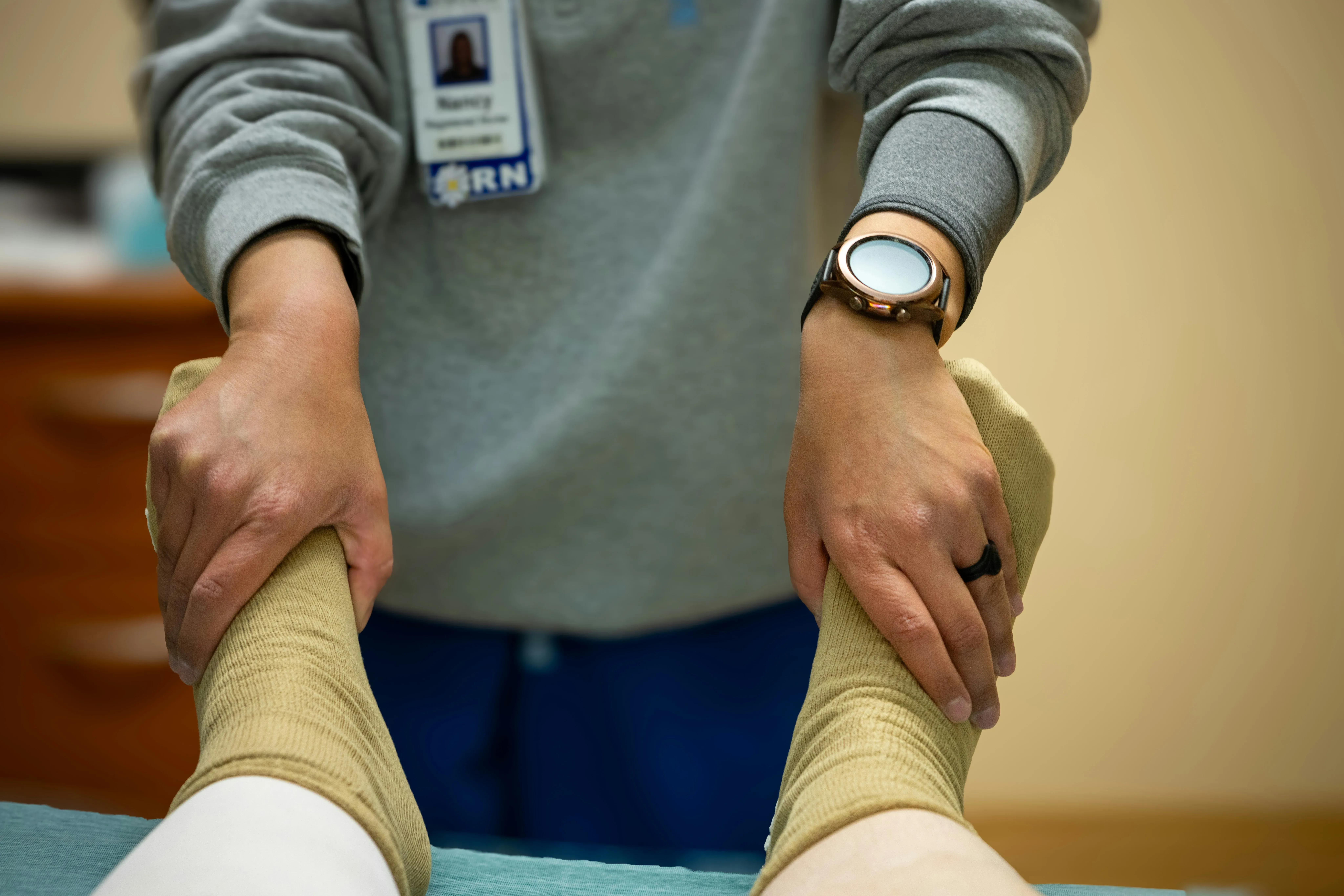
The non-negotiable: specialized boots, casts, or shoe modifications that remove pressure entirely. Wounds walked on do not close.
Modern dressings matched to the wound's needs, and advanced grafting options for wounds that stall despite good care.
Cultures and antibiotics when infected, coordination with your physician on glucose, and vascular referral when flow limits healing.
With complete offloading and proper care, many uncomplicated ulcers close in 6 to 12 weeks. Deeper wounds, infection, or limited circulation extend that. The biggest variables you control: keeping weight off it and keeping glucose steady.
The same neuropathy that let it form silences it. Painlessness is a feature of the disease, not evidence of mildness, and it's why diabetic wounds get evaluated by depth and appearance, never by how they feel.
No dressing heals a wound that's still being stepped on; pressure re-injures it with every stride. Offloading is the treatment. We'll set you up with a boot or shoe that makes staying mobile safe while it closes.
The statistics that scare people describe untreated or late-treated ulcers. Wounds that reach care early, get offloaded, and stay infection-free overwhelmingly heal. Fast action is precisely how amputation statistics don't apply to you.
On most feet a callus is cosmetic. On a diabetic foot it's a pressure gauge, and sometimes a lid over something worse.
Read the article →Medicare pays for therapeutic shoes and inserts for qualifying diabetics every year. Most eligible patients never use it.
Read the article →Most diabetic ulcers are predictable, which means most are preventable. Here's where they come from and how to interrupt the process.
Read the article →One visit at our Sugar Land office gets you a diagnosis and a plan. Call 346-594-9166 or book online.