Bunion Correctors: Do They Actually Work?
The honest answer: they can help how your bunion feels, and they cannot change what it is. Knowing the difference saves money and frustration.
Read the article →A bunion isn't a growth on your foot; it's your foot slowly changing shape. The big toe drifts toward its neighbors, the joint behind it juts out, and shoes that fit last year start to hurt. The earlier it's addressed, the more options you have.
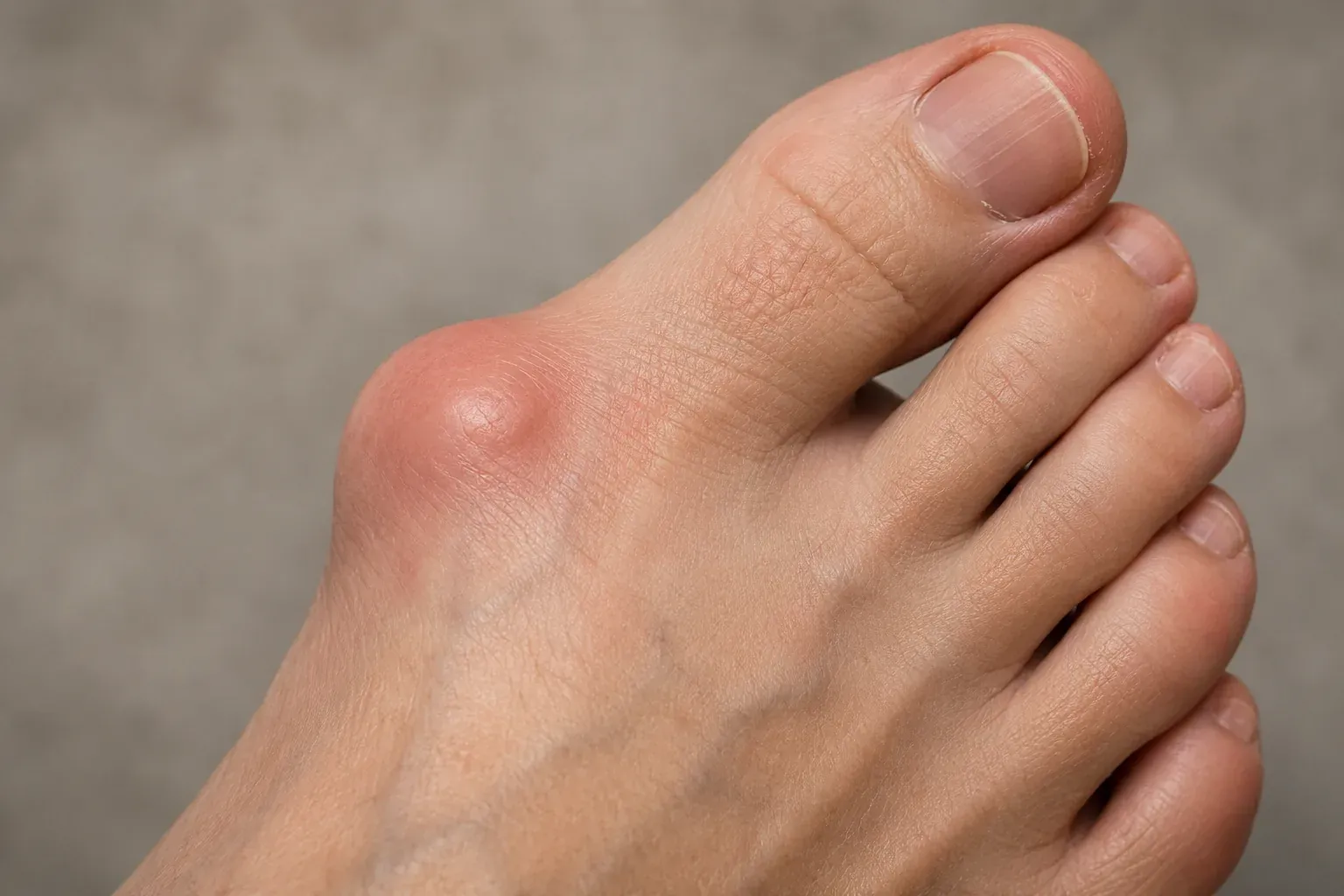
A bunion (hallux valgus) is a structural shift of the first metatarsal bone drifting outward while the big toe angles inward, creating the familiar bump at the joint. It's a mechanical, progressive deformity: the bump is bone in the wrong position, not extra tissue. That's why creams and splints can ease symptoms but nothing short of surgery changes the bone, and why the real skill is knowing when symptom management is enough and when correction is worth it.
Dr. Patel assesses the deformity's angle and flexibility, how your mechanics feed it, and what's actually causing the pain, since the bump, the joint, and the crowded lesser toes each hurt differently. In-office X-rays measure the alignment precisely and stage the bunion, which drives every recommendation that follows.
Come in when the bunion hurts, changes your shoe options, or is visibly progressing. You don't need to be ready for surgery to benefit; early-stage bunions can often be kept comfortable for years, and if correction is ever needed, tracking the progression helps time it well.
Call 346-594-9166 promptly for: sudden severe pain, redness, and heat at the joint, which can be gout or infection rather than the bunion itself. Urgent foot problems are worked into the schedule faster.
Treatment starts with the simplest option likely to work and escalates only when needed.
A wider toe box eliminates most bunion pain immediately. Padding and spacers protect the bump and calm irritated tissue.
Correcting the pronation that drives the drift slows progression and unloads the painful joint.
When the joint's fluid sac (bursa) flares, targeted treatment settles it quickly.
For bunions that hurt despite good conservative care, today's procedures realign the bone itself. Honest conversation first: what recovery looks like, and whether your bunion actually needs it yet.
They can relieve pressure and ease soreness, and toe spacers help neighboring toes. But no splint realigns bone that has structurally shifted. Think of them as comfort tools, not correction.
When pain limits your life despite proper shoes and support. We don't operate on appearance or on X-ray angles alone. When it is time, we'll walk through the specific procedure for your bunion's severity and a realistic week-by-week recovery.
Bunions are progressive, but the pace varies enormously. Addressing the mechanics early, with support and sensible shoes, often slows progression significantly.
Yes. With a wide toe box, proper support, and sometimes a spacer, most people run, hike, and train comfortably. Activity doesn't accelerate a well-managed bunion.
The honest answer: they can help how your bunion feels, and they cannot change what it is. Knowing the difference saves money and frustration.
Read the article →Four real options, very different success rates. An honest comparison before you spend another year on the wrong one.
Read the article →Every ingrown toenail is angry; not every one is infected. Here's the line, and what crossing it means.
Read the article →One visit at our Sugar Land office gets you a diagnosis and a plan. Call 346-594-9166 or book online.