Sever's Disease: A Parent's Guide to Kids' Heel Pain
Your child limps off the field holding a heel. Before you fear the worst: the most likely culprit is growth itself, and it's very manageable.
Read the article →When a 10-year-old limps off the soccer field holding a heel, it's usually not an injury at all; it's growth. Sever's disease is the most common heel pain in active kids, it sounds far scarier than it is, and it ends completely when the growth plate closes.
The heel bone grows from a plate of cartilage at its back, the exact spot where the Achilles tendon pulls. During growth spurts, bones lengthen faster than muscles, so tight calves yank hard on soft growing cartilage thousands of times per practice. The result is an inflamed growth plate: calcaneal apophysitis. It's a traction overload of growth, not damage or 'disease' in any scary sense; it's self-limited, and it leaves no lasting mark when managed sensibly.
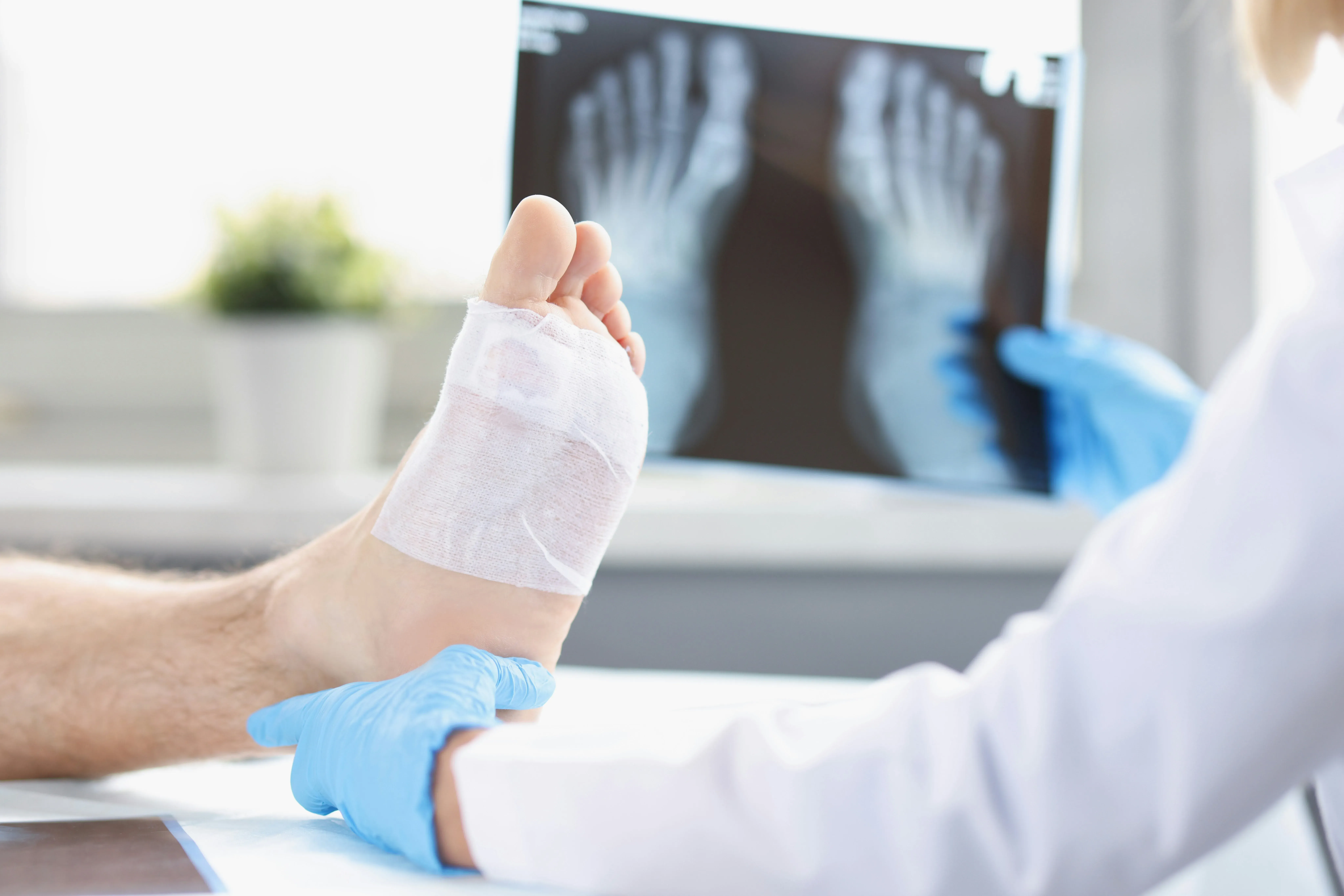
The squeeze test plus the story usually seals it: side-to-side heel compression reproducing pain in a growing athlete. Dr. Patel checks calf tightness (the engine of the condition), gait, and foot structure, using X-rays only when the picture is atypical, to exclude the rare mimics rather than to confirm Sever's.
When a child limps repeatedly after sport, complains of heel pain more than a couple of weeks, or starts avoiding activities they love. Confirming the diagnosis matters (other causes of kids' heel pain exist), and a proper plan usually keeps them playing rather than benched.
Call 346-594-9166 promptly for: heel pain after a distinct injury; swelling, redness, or fever; night pain unrelated to activity; pain in one heel only that's worsening steadily. Urgent foot problems are worked into the schedule faster.
Treatment starts with the simplest option likely to work and escalates only when needed.
The core fix: daily stretching that gives the growth plate slack. Kids who stretch consistently usually stay in their sport.
Gel heel cups in cleats and school shoes reduce both impact and tendon traction immediately.
Trimming the aggravating dose (often just reducing back-to-back sessions) rather than blanket benching.
Orthotics when flat or high-arched feet concentrate heel strain; icing after big sessions for comfort.
Usually not. Most kids manage Sever's with stretching, heel cups, and modest schedule adjustments while staying in their sport. Full rest is reserved for severe cases, and even then it's weeks, not seasons.
No. Sever's resolves completely when the growth plate fuses (usually by 14 to 15) and leaves no arthritis, no weakness, no trace. It's a condition of growing, and it ends with growing.
Because the mismatch that causes it (fast-growing bones, tight calves, high loads) persists through the growth years. Keeping the stretching habit and heel cups through each season usually breaks the cycle until age solves it permanently.
Your child limps off the field holding a heel. Before you fear the worst: the most likely culprit is growth itself, and it's very manageable.
Read the article →The fracture heals in weeks. Whether it stays healed depends on what you do with them.
Read the article →If your ankle rolls on flat ground and you've stopped trusting it, you've graduated from sprains to instability. It's fixable.
Read the article →One visit at our Sugar Land office gets you a diagnosis and a plan. Call 346-594-9166 or book online.